Why Marketing Translation Services Are Key for Global Brands.
04 May, 2026· Article by Taylor Anderson


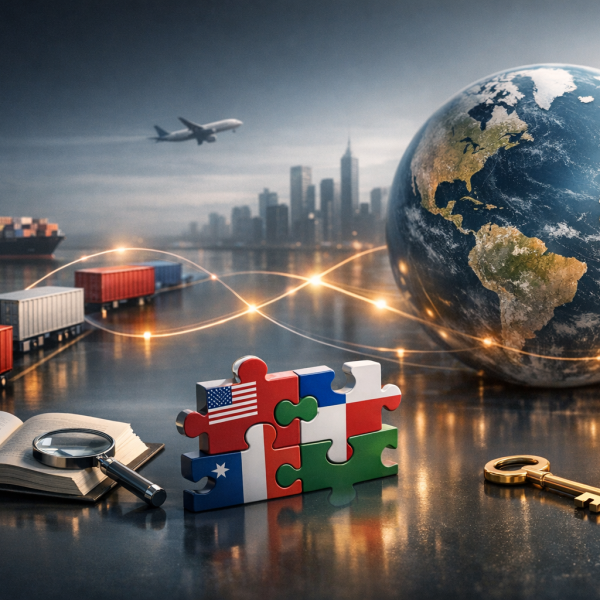
Expanding into new countries is no longer optional for ambitious brands. Yet many global marketing campaigns fall flat when messages are simply translated word for word. Customers in each market bring their own language nuances, cultural expectations, gaming habits, humor, and buying triggers. To truly connect, global brands need content that feels as if it was created locally from the start, not adapted as an afterthought.
1. Build Authentic Connections Instead of Literal Translations
Straightforward translation focuses on accuracy at the sentence level, but global brands compete on emotions, values, and experiences. Marketing content must speak the way customers actually talk, not how a dictionary would phrase it. Professional marketing translation specialists transform slogans, taglines, website copy, and in-app text into messages that resonate emotionally, reflecting local idioms, tone, and expectations.
This authenticity is particularly important for younger, digital-native audiences who quickly spot unnatural phrasing or awkward cultural references. When your messaging feels tailored to their reality, users are more likely to trust, engage, and recommend your brand.
2. Turn Localization into a Competitive Advantage
Localization goes beyond language; it adapts your marketing to local culture, trends, and user behavior. For example, in gaming and entertainment, players expect menus, dialogues, tutorials, and support content to feel native. Brands that invest early in localization earn better reviews, higher retention, and a stronger reputation in new markets.
Game publishers targeting Turkey, for instance, increasingly rely on Turkish game localization services to align user experience, character voice, humor, and even monetization strategies with local preferences. The same principle applies to any sector: the more localized your content, the more “local” your brand appears, even if its headquarters are thousands of miles away.
3. Protect Brand Voice Across All Markets
Every strong brand invests heavily in its voice: playful or serious, premium or accessible, disruptive or traditional. When campaigns are rolled out globally, that voice can easily become diluted if each region improvises its own tone or if translation is approached casually.
Skilled marketing translators preserve the core personality of your brand while flexing to fit local norms. They maintain terminologies, style, and messaging pillars across all languages, often working with brand style guides and glossaries. The result is a consistent brand experience globally, without sounding like a direct copy of the original wording.
4. Maximize ROI on Existing Content and Campaigns
Developing high-performing campaigns, landing pages, videos, and app flows is expensive. Once a concept has proven successful in one market, reusing that creative foundation in other languages is a smart move. However, simple translation can lead to misalignment, weak response rates, and disappointing performance metrics.
Marketing translation enables you to repurpose top-performing assets while fully adapting them to local audiences. CTAs can be reworked to fit purchase habits, social proof adjusted to regional influencers, and testimonials localized to names and scenarios that feel familiar in each country. This approach stretches your marketing budget further and accelerates go-to-market in new regions.
5. Boost Global SEO with Localized Keywords and Content
Search behavior changes significantly from country to country, even within the same language family. Users might search for the same product or experience using completely different phrases, slang, or problem-oriented queries. Translating your keywords directly rarely captures that reality.
Marketing-focused translators with SEO knowledge research local search intent and keyword variations, then integrate them naturally into site copy, blog posts, app store descriptions, and metadata. This ensures your brand ranks for the terms people actually use, improving visibility, organic traffic, and lower acquisition costs. Effective multilingual SEO is a powerful lever for sustainable growth in each market.
6. Avoid Cultural Missteps and Costly Reputation Damage
Marketing history is full of examples where brands used names, images, or phrases that turned out to be offensive, confusing, or embarrassing in another language. Social media can amplify such mistakes instantly, hurting trust and forcing brands into costly damage control.
Professional marketing translators act as cultural advisors, flagging potential issues before launch. They assess imagery, color choices, metaphors, humor, and references to ensure that campaigns are not only understood but also well received. This layer of protection is crucial for maintaining a positive brand image across diverse cultural landscapes.
For global brands, marketing translation is really an argument about consistency: how much a message may change before it stops being the same message. Answering that requires somebody who understands both the brand and the buying behaviour in each market. Those are the same two things a lead generation agency has to hold at once, which is why the good ones start with positioning rather than with channels.
7. Increase Engagement Across All Digital Touchpoints
Customers do not interact with your brand in one place; they move between search engines, social networks, streaming platforms, mobile apps, and offline experiences. Each of these touchpoints has its own format and style norms. Localizing only your website or main product descriptions is no longer enough.
Marketing translation services adapt content across every channel: social media captions, email campaigns, push notifications, SMS, blog content, video subtitles, and more. By making every interaction feel native, brands drive higher click-through rates, stronger time-on-page metrics, and better overall engagement across regions.
8. Shorten Time-to-Market in New Regions
Launch windows are critical, particularly in fast-moving sectors like gaming, e-commerce, and streaming. Synchronizing global releases ensures momentum, press coverage, and word-of-mouth. Without a structured approach to marketing translation, teams often face bottlenecks, last-minute rewrites, and inconsistent messaging.
A dedicated marketing translation workflow allows brands to plan localization in parallel with creative development. Translators, copywriters, and local reviewers can work from early drafts, adapt messaging, and test localized versions. This reduces delays and ensures each market receives a launch that feels tailored and timely.
9. Support Long-Term Brand Loyalty, Not Just Initial Acquisition
Winning a customer in a new market is only the first step. Loyalty is built through ongoing communication: newsletters, loyalty program updates, community events, patch notes for games, and customer support messaging. If these communications shift back into generic or poorly translated content, trust quickly erodes.
Consistent, high-quality marketing translation maintains the relationship with your global customers. It shows that you value them long after the first purchase and that their market is not an afterthought. Over time, this fosters brand advocacy and organic growth in each region.
Conclusion
For global brands, language is more than a functional barrier; it is the gateway to cultural relevance, emotional impact, and sustainable growth. Treating translation as a final, mechanical step in campaign rollout leads to wasted potential and disconnected audiences. By investing in specialized marketing translation and localization, brands preserve their identity while speaking directly to the hearts and minds of local customers.
Whether you are launching a new app, entering a fast-growing gaming market, or scaling your e-commerce presence, putting marketing translation at the center of your global strategy enables deeper engagement, stronger reputation, and better returns on every campaign you run worldwide.
Recent Posts

Why Cloud-Based Translation In...

Brasilianische Fußballer Brau...

Les Salons Professionnels Mise...

Brazilian Portuguese and Europ...

Traduction français anglais g...

Mudarte A Brasil Exige Traducc...
Share it.

We use cookies
We use cookies to give you the best online experience, remember your preferences, and understand how the site is used. You can accept all cookies, reject optional ones, or choose which categories to allow.
Privacy PolicyCookie preferences
Choose which cookies we can use. Necessary cookies stay on because the site cannot work without them.
For more details, read our Privacy Policy.